
By Georgios Karantanis
Introduction
This analysis examines the role of military drones in Iran’s regional strategy and their use by Iranian-backed armed groups as instruments of coercion. It outlines the strategic rationale behind Iran’s development and transfer of drone capabilities. It then analyzes how Hezbollah and the Houthis have employed drones in coercive campaigns. It assesses the approaches adopted by the two groups and their contributions to Iran’s regional strategy.
The Evolution of Iran’s Regional Strategy
Following the Islamic Revolution of 1979, Iranian leadership sought to spread it throughout the region. Their rhetoric promoted the theme of liberation via Islam and, consequently, threatened the regimes of neighboring states associated with the West. The Iranian leaders saw it as a way of avoiding isolation in order to ensure the security of the young Islamic regime. Initially, the idea could not be realized as Ayatollah Khomeini’s camp was still focused on Iran’s interior (CIA, 1980, 1-2). This religious element reshaped Tehran’s conception of how it should project power and continues to influence its behavior today (Ehteshami, 2014, 268). It likely laid the groundwork for the creation of Iran’s “proxy” network.
In order to counter US actions against it, Iran has successfully developed a network of non-state actors. To determine whom this network is mainly directed against, Iran’s threat perception has to be assessed. The first major actor threatening Iran is the US through a dual role. On the one hand, Washington maintains what Tehran views as an “oppressive regional status quo”, which includes Israel and major Arab states. On the other hand, it acts as a revisionist power by pursuing regime change in Middle Eastern states (Harrison, 2025, 62-63). The second actor Iran considers a major threat is Israel, so much so that it rejects Tel Aviv’s claim to statehood. The Palestinian issue, the Shah’s partnership with Israel and Israel’s opposition to Iranian efforts have all played their part in creating this notion. In general, both countries are regarded as existential threats by the Islamic Republic (Harrison, 2025, 81-84).
As Iran’s “proxy” network expanded, a geostrategic vision of a corridor to the Mediterranean Sea arose. It started as a conceptual route for supplying Hezbollah and the Assad regime during the early stage of the Syrian civil war. It was an essential security measure by Tehran to ensure the survival of its Syrian and Lebanese allies. Later, the rallying of Iraqi militias under the Popular Mobilization Forces and their subsequent victories against ISIS and Kurdish separatists significantly strengthened the Iranian axis. Western analysts feared the creation of a “Northern route” and a “Southern route”, which would directly connect Iran to Iraq, Syria and Lebanon. Voices within Iran conceptualized a similar vision of connectivity, with some recognizing potential gains for their country (Adesnik and Taleblu, 2019, 10-16). This potentially indicates a change in how Tehran mainly used its militia network. Iranian strategy shifted from balancing against enemies to maximizing Iran’s regional power via “proxies”.
The regional crisis sparked by the October 7 attacks severely undermined Iran’s regional strategy. Israeli strikes in mid-2024 severely weakened Hezbollah, while the overthrow of the Assad regime in December 2024 shifted the power dynamics of the entire region. The immediate consequences of Syria’s downfall were the loss of a direct supply route to Hezbollah and the inability to recover Iranian capital provided to Assad (Juneau, 2025, 6-7). On a strategic level, the outcomes were failure to create the corridor to the Mediterranean, failure to protect Iran’s top state ally, Syria, and partial failure to support Hezbollah. However, Tehran has found alternative ways to continue supplying its “proxies” in Yemen and the Levant, with them also possessing their own sources of funding (Jacobson and Levitt, 2026). This likely points to significant preservation of the Iranian axis’ capabilities, allowing Iran to revert to its original strategy of balancing against enemies.
The Development and Transfer of Iranian Drone Capabilities
Military drones have become a key instrument of Iran’s regional strategy. In terms of general strategic utility, they offer considerable advantages when it comes to acts of coercion. As modern military conflict tends to last longer, drones allow states to maintain a persistent capability of threatening adversaries. Drones can remain airborne for extended periods while retaining the ability to strike near-instantaneously, thus creating a sense of constant vulnerability among targeted actors. Drones also cause an imbalance in the costs of conflict by letting coercers inflict substantial damage on targets with minimal risk to their own resources (Zegart, 2020, 22-27). All these factors make threats substantially more credible in instances of coercion involving drone use.
Beyond their broad strategic value, Iran makes extensive use of drones, driven by specific security needs arising from external constraints. In particular, sanctions have limited Tehran’s ability to supply its military, encouraging it to start producing drones as a counterbalance. Gradually, the Iranian drone industry expanded and increased the operational effectiveness of its models on national security grounds (Akbarzadeh, 2024, 1-2). The production of drones in Iran began in 1985 amid the Iran-Iraq war, primarily for gathering combat intelligence. Today, the Islamic Republic owns a drone fleet numbering in the tens of thousands, having the means to replenish it because of cheap drone manufacturing (Feldstein, 2026).
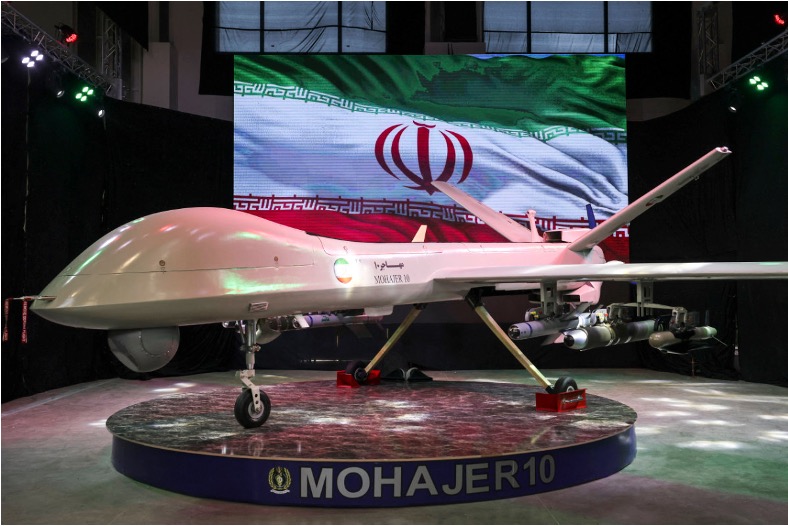
Rather than keeping military drones for itself, Iran has extensively shared this capability with its “proxy” militia network. Specifically, Hezbollah in Lebanon and the Houthis in Yemen are Tehran’s main beneficiaries, utilizing sophisticated versions of Iranian drones with varying degrees of success. Iran has also made sure to increase connectivity between the two actors by stimulating cooperation. As a result, Hezbollah and the Houthis traded expertise and technical knowledge related to military drones directly. Nevertheless, the process was largely a one-way transfer of knowledge from Hezbollah to the Houthis instead of a bilateral one (Milan, 2026, 8). Apart from their standard operational use, drones also form part of Iran’s coercive strategy implemented by its “proxies”.
Drone-Based Brinkmanship: Hezbollah’s Coercive Campaign
Hezbollah has only recently begun unlocking its potential to use military drones. Its drone program started in 2002, after the obtainment of Iranian models. The group’s first operational use of a drone occurred in 2004. The extent to which Hezbollah harnessed its drone capabilities was very limited, consisting mainly of reconnaissance missions in Israeli airspace (Badran, 2016, 9). This changed during the 2023 Israel-Hezbollah conflict and the following 2024 Lebanon war, when Hezbollah operated First Person View drones in combat. The organization has developed the capacity to cheaply produce FPVs on its own inside Lebanese territory. Reportedly, it managed to stockpile a large quantity of them by way of smuggling. Hezbollah-linked media have presented FPVs as a game-changer on the battlefield, basically attempting to increase Israel’s threat perception through narratives (ATIRI, 2026).
The outbreak of the 2026 Iran War prompted Hezbollah to attack Israel with FPV drones at an unprecedented level. From April to June 2026, drone attacks accounted for approximately 600 out of Hezbollah’s 1,130 attacks against Israel. The majority of them were launched against moving military targets, which is tied to the functionality of FPV drones. Traditional drones are designed for missions against known, immobile targets, whereas FPVs are optimized for detecting and striking targets on the spot. FPVs can locate enemies in three different ways, relying on sight, heat or signals (Polak, 2026). These features found in FPVs could amplify the coercive effects of drones as they were previously discussed in the text. Specifically, FPV drones might have increased Tel Aviv’s sense of vulnerability by affording Hezbollah the ability to launch increasingly unexpected attacks.
The aforementioned drone campaign was not just a military act but also served Iranian interests via coercion. Since the start of the 2026 Lebanon war, Israel has been persistent in eliminating Hezbollah militarily, while the US viewed Lebanon as a distinct issue from the 2026 Iran war. The drone attacks brought Israel into a continuous state of brinkmanship with Hezbollah before and during the Islamabad talks to end the Iran war. By risking imminent escalation, Hezbollah’s attacks pressured the US into restraining Israel and including Lebanon in the Islamabad Memorandum (Grieco et al., 2026). From a proxy relations perspective, Hezbollah’s sustained drone campaign generated a deterrent effect. Iran may have intended to increase costs and Israel’s perceived risk of escalation through its Lebanese “proxy”. In doing so, Tehran may have sought to deter Tel Aviv from intensifying military operations against Hezbollah and, indirectly, Iran itself.
The Houthi Case: The Limits of Drones as Coercive Tools
Just like Hezbollah, the Houthis have successfully procured drone capabilities. Necessary technical components are brought from abroad, ultimately reaching the Houthis through a supply route in Oman. Afterwards, they are used by the Houthis to produce military drones in Yemen itself. Since 2015, the Houthis have been increasing their domestic drone production due to Iranian assistance. Their drone force contains a mix of offshoots of Iranian models and local designs. In addition to aerial drones, the Houthis are known to possess maritime drones (Bales et al., 2024, 1131-1132). In January 2024, US forces interdicted an Iran-linked shipment to the Houthis in which they found maritime drone parts among other materials for weapons (CENTCOM, 2024). This discovery establishes a correlation between Tehran and the Houthis’ maritime drone capabilities, although it does not provide conclusive proof of sustained Iranian supply.
Despite Hezbollah and the Houthis having used drones for the same form of coercion, namely compellence, their techniques differ. Hezbollah has employed brinkmanship, whereas the Houthis have employed classical compellence. While brinkmanship involves creating a shared risk of unintended mutual disaster, classical compellence involves causing a gradual accumulation of costs to exert pressure on opponents (Schelling, 2008, 90-91). For the duration of the 2023-2025 Gaza war, the Houthis attempted to disrupt shipping through the Red Sea by attacking ships with missiles and drones. The goal was to compel Israel to end military operations in the Gaza Strip. Even though this act of coercion served Iranian interests, whether the Houthis acted as a “proxy” following a decision taken by Tehran remains contested. Considering that Iran’s limited assistance has not given it full control over the Houthis, the Yemeni militia presumably maintains a considerable degree of autonomy (Matallah, 2026, 8).
In contrast to Hezbollah’s relative success, the Houthis’ coercive campaign elicited a strong response at their expense. Two multinational naval operations were launched against the Houthis with the aim of protecting maritime traffic in the Red Sea. In December 2023, the US launched Operation Prosperity Guardian with the participation of more than 20 countries. Major European allies kept their distance from the US-led operation, choosing to carry out separate missions on their own. In February 2024, the EU launched Operation Aspides, which aimed to protect a wide area around the Arabian Peninsula (Albimani and Kardaş, 2026, 4). The US and the UK launched two joint operations of aerial bombardment against the Houthis in 2024 and 2025. The second one encompassed over 1,000 airstrikes, resulting in significant losses for the Houthis (Khatib, 2026, 12). In the end, the Houthis succumbed to the airstrikes and agreed to a ceasefire with the US in May 2025 (Alaaeldin et al., 2025).
Conclusion
Iran’s transfer of drone capabilities has strengthened the coercive options available to its armed “proxies”. However, the cases of Hezbollah and the Houthis demonstrate that drones do not produce uniform strategic outcomes. Hezbollah’s use of FPV drones enabled brinkmanship by increasing escalation risks and successfully pressured the US to restrain Israel. In contrast, the Houthi campaign demonstrated that drone-based compellence can impose costs but also provoke sustained international responses. These cases suggest that drones function as a tool of disruption rather than a guarantee of coercive success within Iran’s regional strategy. This raises the question of whether Iran’s transfer of drone capabilities has strengthened a coordinated regional network aligned with its strategic objectives, or instead created increasingly autonomous armed actors whose actions diverge from Iranian interests.
List of References
Adesnik, D. and Taleblu, B. B. (2019) The Iranian Land Corridor to the Mediterranean. Foundation for Defense of Democracies. Retrieved from https://www.fdd.org/wp-content/uploads/2019/06/fdd-report-burning-bridge.pdf [Accessed: July 2026]
Akbarzadeh, S. (2024) Iran’s Missile and Drone Program: Disrupting U.S. Aerial Hegemony. Middle East Council on Global Affairs. Retrieved from https://mecouncil.org/wp-content/uploads/2024/07/ME-Council_Issue-Brief-Iranian-Drones-Final-_WEB.pdf [Accessed: July 2026]
Alaaeldin, M., Holland, S., Renshaw, J. and Taha, J. (2025) Trump announces deal to stop bombing Houthis, end shipping attacks. Reuters. Retrieved from https://www.reuters.com/world/trump-says-us-will-stop-bombing-houthis-after-agreement-struck-2025-05-06/ [Accessed: July 2026]
Albimani, S. and Kardaş, Ş. (2026) Common maritime security policy in the GCC: revisiting the challenges in the wake of the Red Sea crisis. Middle Eastern Studies, pp. 1-15. Retrieved from https://www.tandfonline.com/doi/full/10.1080/00263206.2026.2689438 [Accessed: July 2026]
Badran, T. (2016) Hezbollah’s Growing Threat Against U.S. National Security Interests in the Middle East. Foundation for Defense of Democracies. Retrieved from https://www.congress.gov/114/meeting/house/104719/witnesses/HHRG-114-FA13-Wstate-BadranT-20160322.pdf [Accessed: July 2026]
Bales, M., Meininghaus, E. and Mutschler, M. (2024) The impact of precision strike technology on the warfare of non-state armed groups: case studies on Daesh and the Houthis. Small Wars & Insurgencies, 35(7), pp. 1123-1150. Retrieved from https://www.tandfonline.com/doi/full/10.1080/09592318.2024.2319216 [Accessed: July 2026]
CENTCOM (2024) CENTCOM Intercepts Iranian Weapons Shipment Intended for Houthis. Retrieved from https://www.navy.mil/Press-Office/News-Stories/Article/3678450/centcom-intercepts-iranian-weapons-shipment-intended-for-houthis/ [Accessed: July 2026]
Central Intelligence Agency (1980) Iran: Exporting the Revolution. Retrieved from https://www.cia.gov/readingroom/docs/CIA-RDP81B00401R000500100001-8.pdf [Accessed: July 2026]
Ehteshami, A. (2014) The Foreign Policy of Iran, in Ehteshami, A. and Hinnebusch, R. (ed.) The Foreign Policies of Middle East States. 2nd edn. Lynne Reinner Publishers, pp. 261-288.
Feldstein, S. (2026) The Unintended Consequences of Iran’s Asymmetric Strategy and America’s AI War. Carnegie Endowment for International Peace. Retrieved from https://carnegieendowment.org/research/2026/05/the-unintended-consequences-of-irans-asymmetric-strategy-and-americas-ai-war [Accessed: July 2026]
Grieco, K. A., Saade, G. and Slingbaum, H. (2026) Going Over the Brink: How Hizballah’s Risk Strategy Made Lebanon Impossible to Ignore. War on the Rocks. Retrieved from https://warontherocks.com/going-over-the-brink-how-hizballahs-risk-strategy-made-lebanon-impossible-to-ignore/ [Accessed: July 2026]
Harrison, R. (2025) Decoding Iran’s Foreign Policy: Strategic Interests, Power and Influence. I. B. Tauris.
Jacobson, M. and Levitt, M. (2026) Keeping Iran’s Proxies on Their Back Feet. The Washington Institute for Near East Policy. Retrieved from https://www.washingtoninstitute.org/policy-analysis/keeping-irans-proxies-their-back-feet[Accessed: July 2026]
Juneau, T. (2025) Iran’s Annus Horribilis in 2024: Beaten, but Not Defeated. Middle East Policy, 32(2), pp. 3-17. Retrieved from https://onlinelibrary.wiley.com/doi/10.1111/mepo.12814 [Accessed: July 2026]
Khatib, L. (2026) The Degradation of Iran’s Proxy Model. Belfer Center. Retrieved from https://www.belfercenter.org/sites/default/files/2026-04/Belfer_ Degradation of Irans Proxy Model_2.1.pdf [Accessed: July 2026]
Matallah, S. (2026) Red Sea Disturbances and Their Far-Reaching Implications: Longer Transit Times and Sky-High Freight Rates. Digest of Middle East Studies, 35(3). Retrieved from https://onlinelibrary.wiley.com/doi/10.1111/dome.70032 [Accessed: July 2026]
Milan, F. F. (2026) Terrorist groups, advanced armed drones, and nonstate warfare. Defence Studies, pp. 1-15. Retrieved from https://www.tandfonline.com/doi/full/10.1080/14702436.2026.2678585 [Accessed: July 2026]
Polak, D. (2026) Hezbollah’s FPV Drone Threat: Analysis of Attack Targets, Detection Mechanisms, and Exposure-Reduction Tactics. Alma Research and Education Center. Retrieved from https://israel-alma.org/hezbollahs-fpv-drone-threat-analysis-of-attack-targets-detection-mechanisms-and-exposure-reduction-tactics/ [Accessed: July 2026]
Schelling, T. C. (2008) Arms and Influence: With a New Preface and Afterword. Yale University Press.
The Amit Terrorism and Intelligence Research Institute (2026) Hezbollah Uses First Person View Drones Against Israel. Retrieved from https://www.terrorism-info.org.il/en/hezbollah-uses-first-person-view-drones-againt-israel/[Accessed: July 2026]
Zegart, A. (2020) Cheap fights, credible threats: The future of armed drones and coercion. Journal of Strategic Studies, 43(1), pp. 6-46. Retrieved from https://www.tandfonline.com/doi/full/10.1080/01402390.2018.1439747 [Accessed: July 2026]